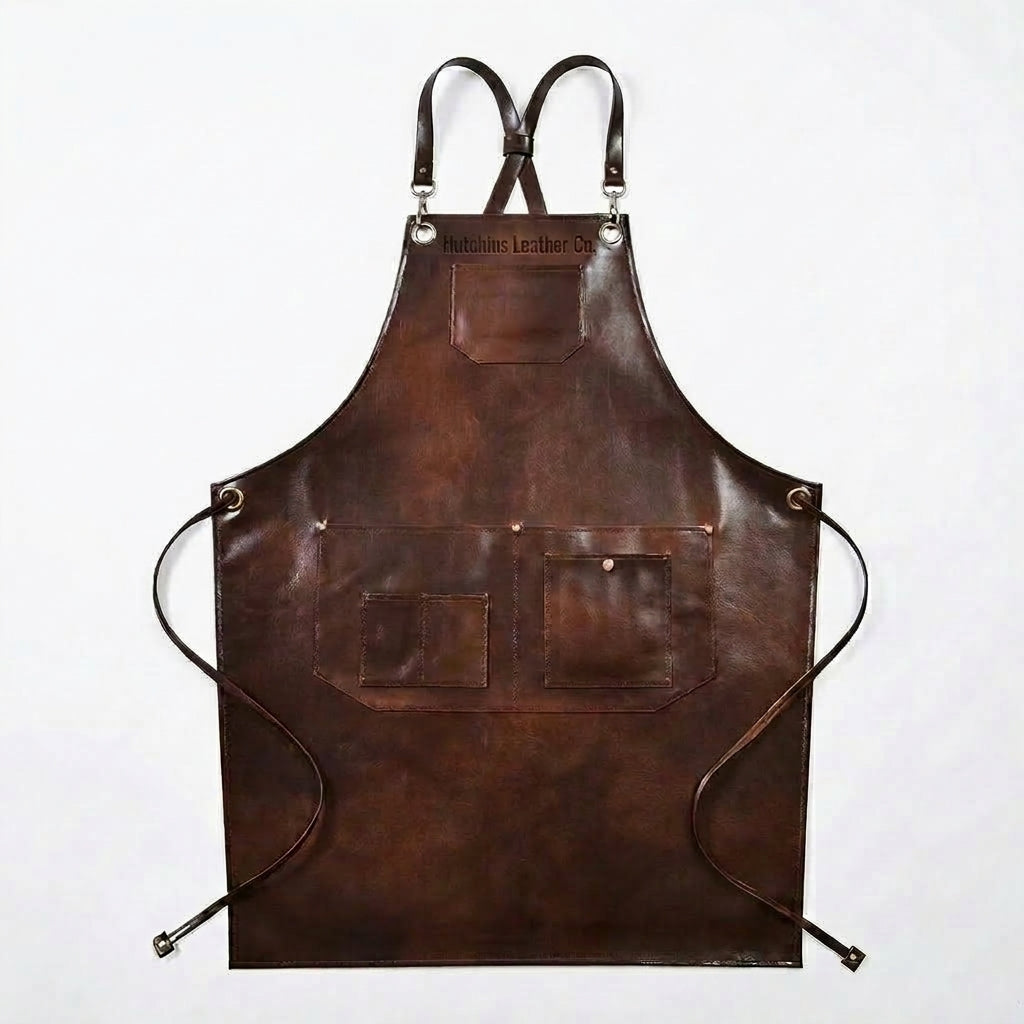
American Woodworkers Are Scooping Up The Final 200 Workshop Aprons From This 47-Year Pennsylvania Bench Direct At $89 Instead Of $259
For 47 years, the bench masters of Pennsylvania's leather-and-canvas workshops sewed aprons designed to outlast their buyers. The last batch is now shipping direct to American shops.
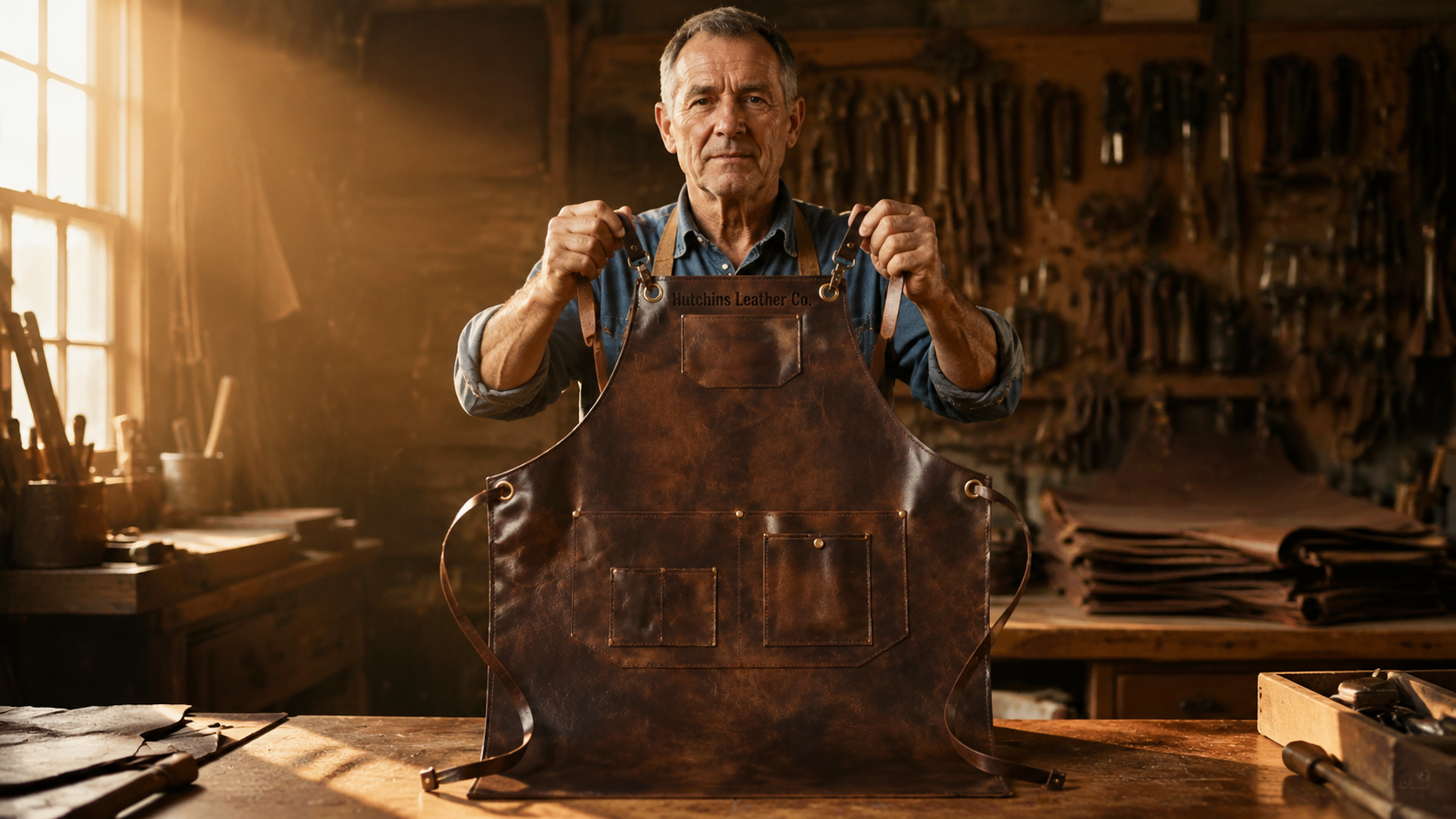
On a Tuesday morning in November, in a brick workshop on the west side of Lancaster, Pennsylvania, the smell of vegetable-tanned hide and beeswax fills the air. At a low bench cluttered with brass dies, Walter Reinholt is finishing his 200th and final workshop apron of the year.
His knees, he says, are not what they were after 47 years at the cutting table. His son, who learned the saddle stitch beside him at 14, took an engineering job in Pittsburgh last spring. And the wholesale orders that once kept him sewing have thinned as chain stores filled their walls with cotton-strap aprons stamped overseas. 'I knew the bench would not survive another season,' he says.
Rather than dump the remaining 200 to a wholesaler, Walter made a different call. He listed them direct from the workshop at $89 instead of the $259 the same apron sold at independent woodworking stores last year. 'I would rather they end up on a real woodworker,' he said, 'than rotting in a warehouse.'
What follows is the story of how a 47-year Pennsylvania bench tradition reached this Tuesday morning, why the leather yoke decides whether an apron survives a real shop, and how 200 American woodworkers are about to receive his final batch.
Pennsylvania's Bench Tradition: 47 Years Of Hide And Canvas
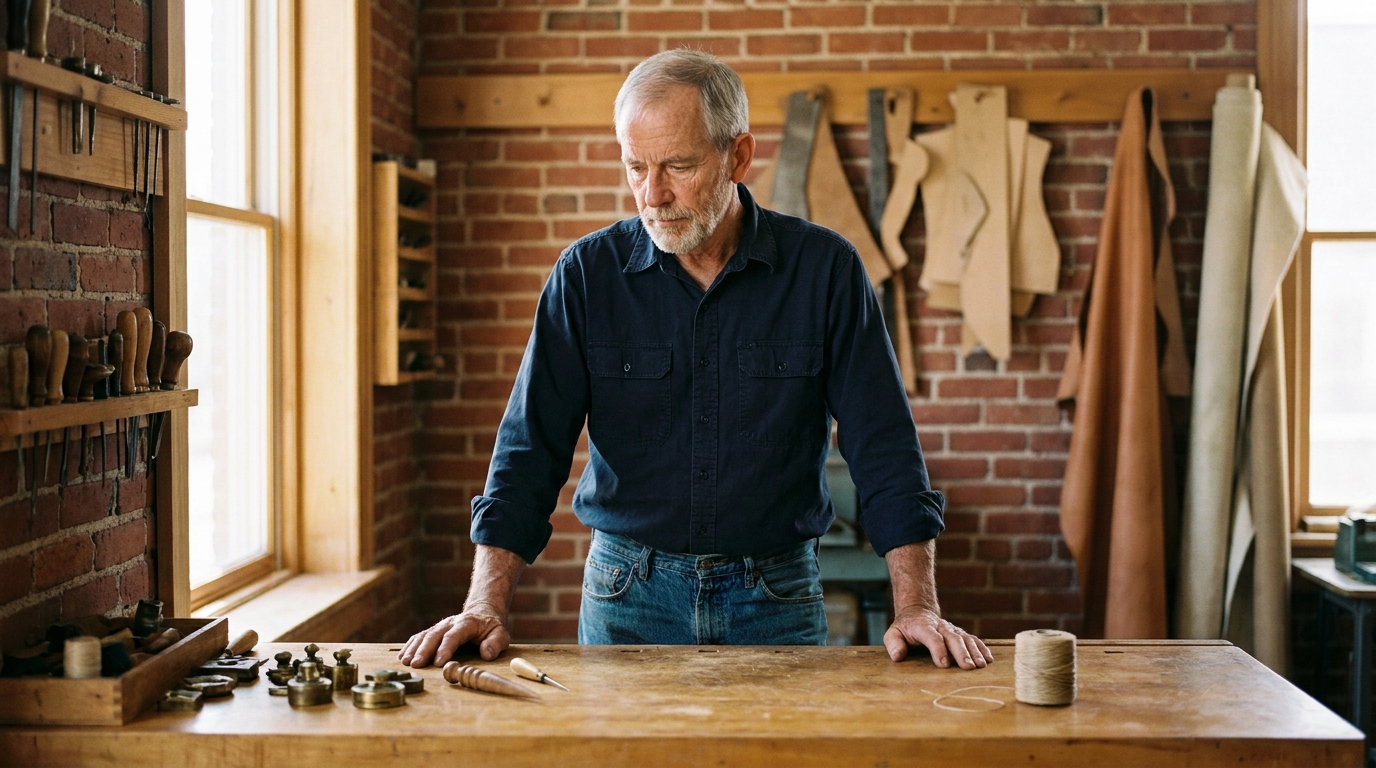
Lancaster County sits at the heart of Pennsylvania's German woodcraft belt — the same hills that gave America its early Conestoga wagons, its long rifles, its barn-built furniture. The hide here was tanned with oak bark from local mills, and the canvas woven on Philadelphia looms.
For 47 years at this same bench, and for nearly two centuries before in the Reinholt family workshops back to a great-grandfather who outfitted Civil War cavalry saddlers, the leather-and-canvas apron has been sewn the same way.
The reason a Pennsylvania-tanned hide outperforms a sheet of imported leather is not romance. The cold winters slow the tannage, locking fiber density into the grain. A buckle yoke cut from this hide work-hardens under load instead of stretching, which is why a Pennsylvania apron strap can carry framing squares for a decade.
Walter is the third bench master to sit at this 1934 maple-top table. Before him came his uncle Henrik, and before Henrik a man named Ezra Mast — each of whom passed the saddle stitch down by hand.
How Cotton-Strap Imitations Sold Under Heritage Names Erased The Real Apron
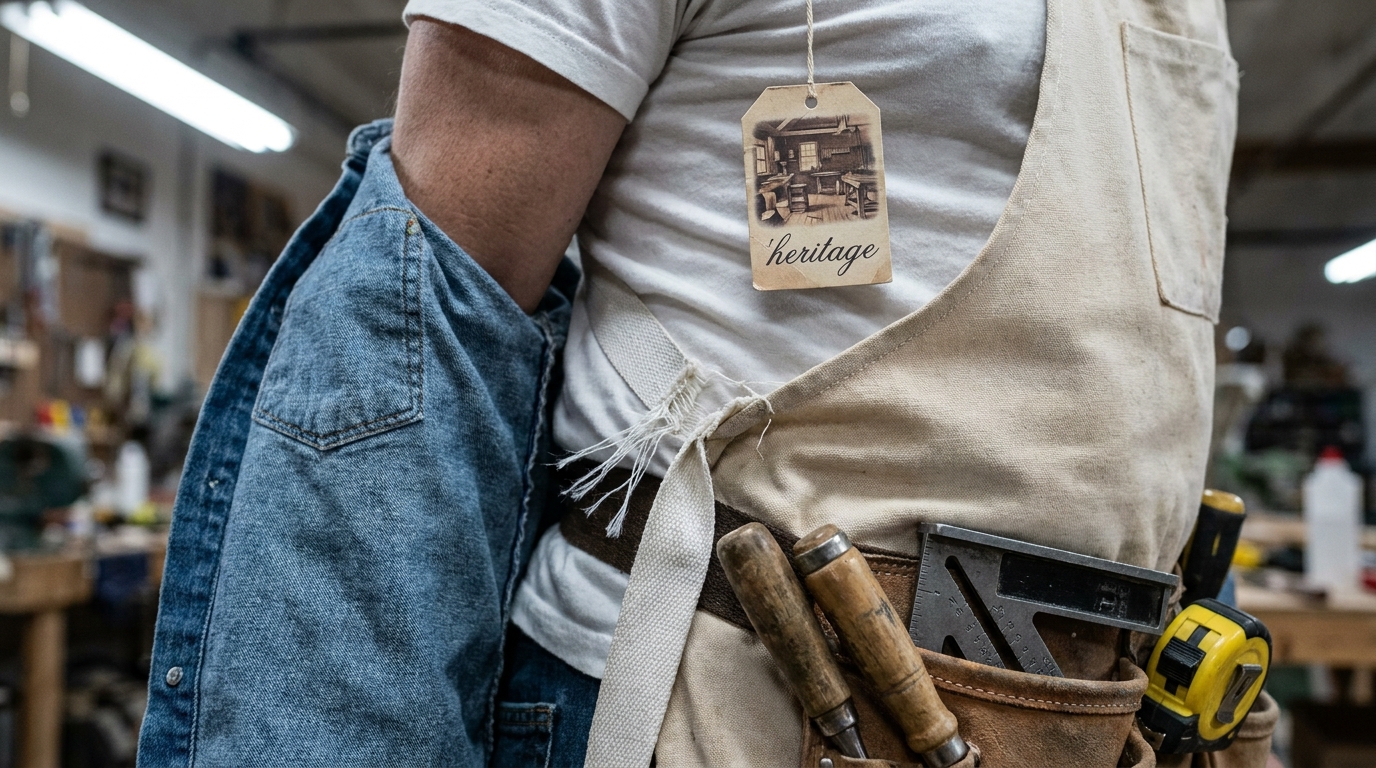
The first wave hit in the early 1990s, when offshore manufacturing made it possible to ship a 9-ounce cotton-canvas apron with thin polyester webbing for a third of what a Pennsylvania-stitched piece had cost at the lumberyard counter. The sleeves and pockets looked the part. The shoulder yoke — the one component that has to carry chisels, a framing square, and a 25-foot tape — was made of cheap webbing.
By 2008, a Tennessee importer had registered a brand name that included the word 'heritage' and was selling a Vietnamese-sewn apron at chain hardware stores under hangtags illustrated with American workshop scenes. Walter watched 4 of his small wholesale accounts switch to that brand within 18 months. 'Same word on the tag,' he says. 'Different country, different hide, different shoulder.'
What disappears with these substitutions is not nostalgia. It is the load-bearing shoulder yoke that decides whether an apron survives a real shop. A cotton-strap apron tears at the trapezius seam by month four under a loaded tool belt. A leather-yoke apron from a Pennsylvania bench gets stronger with use.
'In 10 years,' Walter says, looking up from the awl, 'no woodworker under 40 will know what a real shoulder yoke even feels like under load. They will think the cotton strap is normal.'
That is what made him pick up the phone last winter and ask his oldest customers to spread word that the final 200 of his canvas-and-leather aprons were going direct, no wholesaler, no chain store, no Tennessee importer with a heritage hangtag. Direct from the bench in Lancaster to the woodworker.
4 Hours Of Hand-Sewing, 14 Brass Rivets, 1 Saddle Stitch
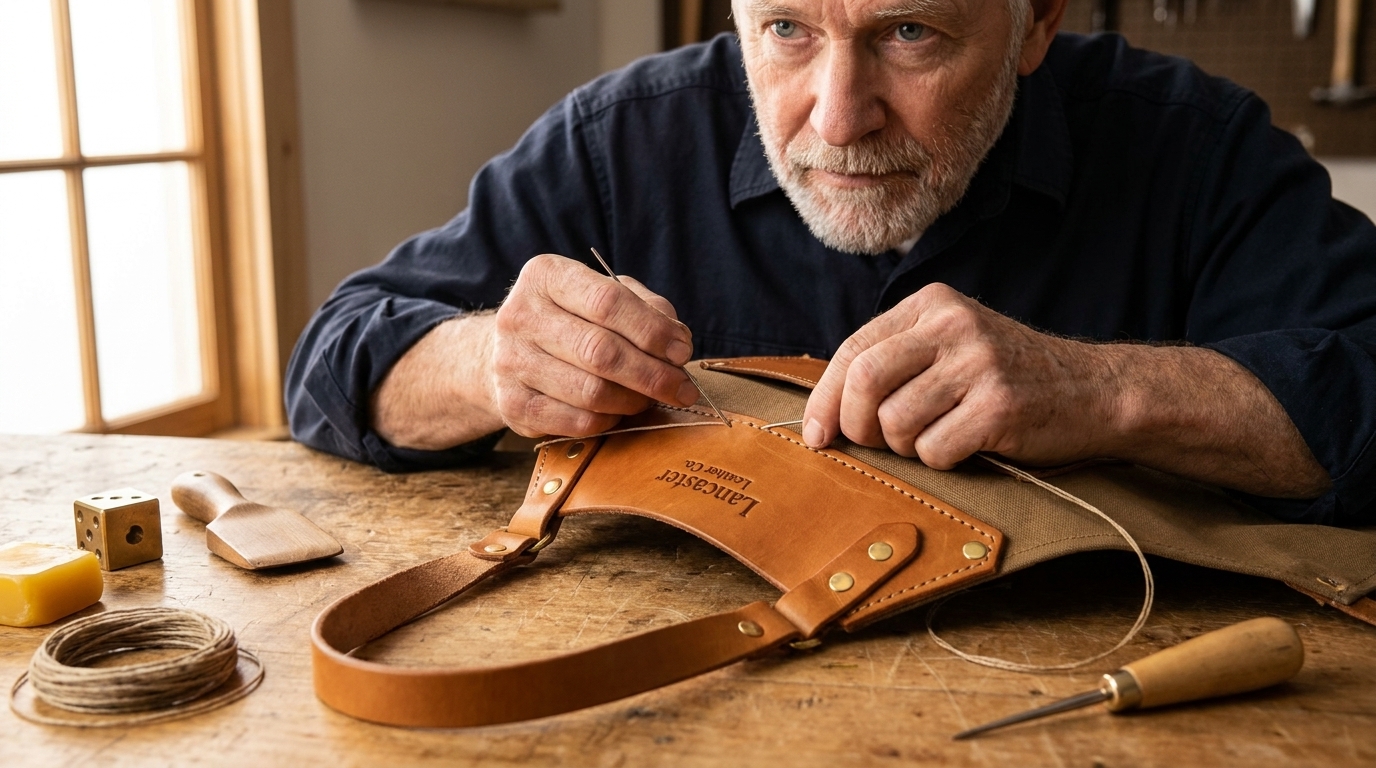
To understand why a Pennsylvania-bench apron lasts a decade where a hardware-store apron lasts four months, you have to follow the method from the cut to the final hand-burnished edge.
It begins with a 14-ounce duck canvas sourced from a Massachusetts mill, cut on a maple table with a brass die that has been on this bench since 1934. The shoulder yoke is cut separately from a single hide of vegetable-tanned bridle leather — the same hide cavalry saddlers used — soaked in cold water and stretched on a wooden form for two days before stitching.
'A factory will run a yoke through a roller in 6 seconds,' Walter says. 'I leave it on the form for 48 hours so the leather memory matches the shoulder it will carry. That is what makes a strap last 10 years instead of 4 months.'
The saddle stitch around each pocket and across the yoke is run by hand with two needles and waxed Irish linen — 4 hours per apron, 14 brass rivets set with a brass die, every edge hand-burnished with beeswax and a slicker. A modern factory line completes the same apron in 90 seconds with synthetic thread.
Modern textile engineering now confirms what bench masters knew by hand: a stitched-and-formed leather yoke distributes shoulder load nearly as evenly as a properly fitted carpenter's tool belt.
"I have worn the same Lancaster apron in my shop since 2014. The leather yoke is darker, softer, more comfortable than the day I bought it. It is the only piece of shop gear I have never had to replace."
What A Smithsonian Folklife Curator Found In Lancaster's Bench Tradition
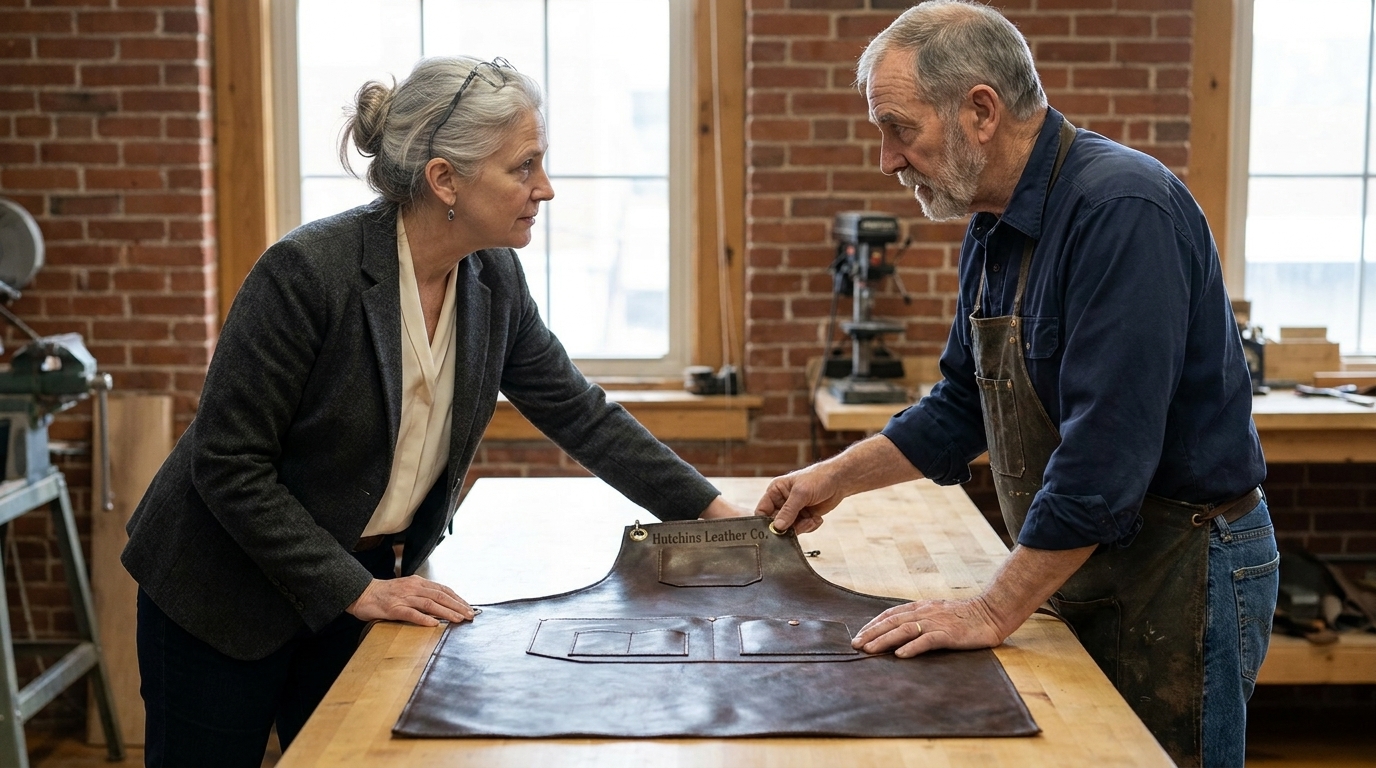
Dr. Eleanor Farnsworth spent 14 years documenting American craft traditions at the Smithsonian Folklife Center before she ever set foot in Walter Reinholt's Lancaster workshop. When she did, in 2019, she stayed three days.
What she had come to verify was a question she had asked at six other workshops: did the leather yoke story actually hold up under engineering scrutiny, or was it heritage romance?
'Walter's yoke is not romance,' she wrote in a 2021 field note. 'The vegetable-tanned hide on a stitched-and-formed shoulder distributes a 9-pound tool load across the trapezius the way a fitted weight belt does. Cotton webbing on a $40 apron does the opposite.'
In her field measurements, Dr. Farnsworth recorded three concrete differences: the Lancaster yoke shed sweat 4 times slower than poly webbing; the canvas body resisted abrasion at 2.5 times the cycles; and the hand-set rivets held without backing-out at loads that sheared the imported equivalents.
'My grandfather sewed for the cavalry, my uncle for the carpenters' union of 1956,' Walter says. 'I sew for the woodworker. The stitch has not changed in 90 years.'
Modernization, Dr. Farnsworth notes, is not the enemy. Industrial sewing machines, traceability, and modern thread coatings actually protect this tradition. What betrays it is industrial substitution dressed up to look identical at the hangtag.
That is why she helped Walter quietly prepare the final 200 aprons for direct shipment — each one bench-stamped, dated, and traceable to the bench it was sewn at.
Why The Final 200 Are Shipping Direct From The Lancaster Bench, Not A Hardware Store
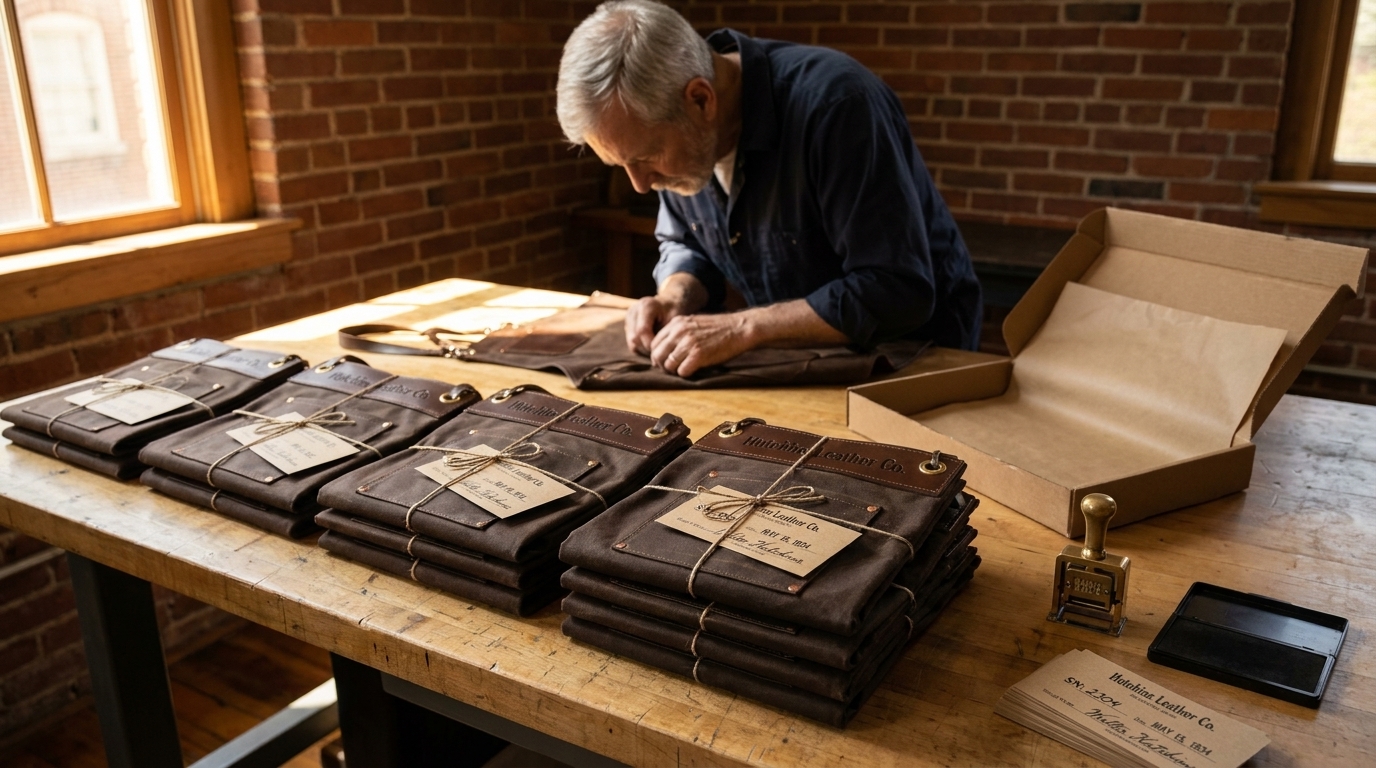
Walter does not list this apron at chain hardware stores. He never has. Direct shipment from the workshop in Lancaster preserves the hide's freshness — every yoke ships within 12 days of being formed on the bench, before the leather memory sets fully.
Each apron carries a hand-stamped serial number paired with a paper bench card signed by Walter, traceable to the cut date, the hide source mill, and the canvas roll. Independent leather-goods certification verifies the hide tannage.
Only 200 aprons are completing this final winter run. There is no second batch in 2026. When the bench card numbers reach 200, the listing closes and the workshop quietly winds down.
At $89 instead of the $259 independent woodworking stores listed it at last year, the price reflects the actual cost of 4 hours of hand-stitching, vegetable-tanned hide, and 14-ounce duck canvas — not chain-store markup.
This is not retail. This is direct from the bench in Lancaster, from the last bench master willing to sew a real shoulder yoke for an American woodworker.
30-Year Owners Of The Lancaster Apron Speak
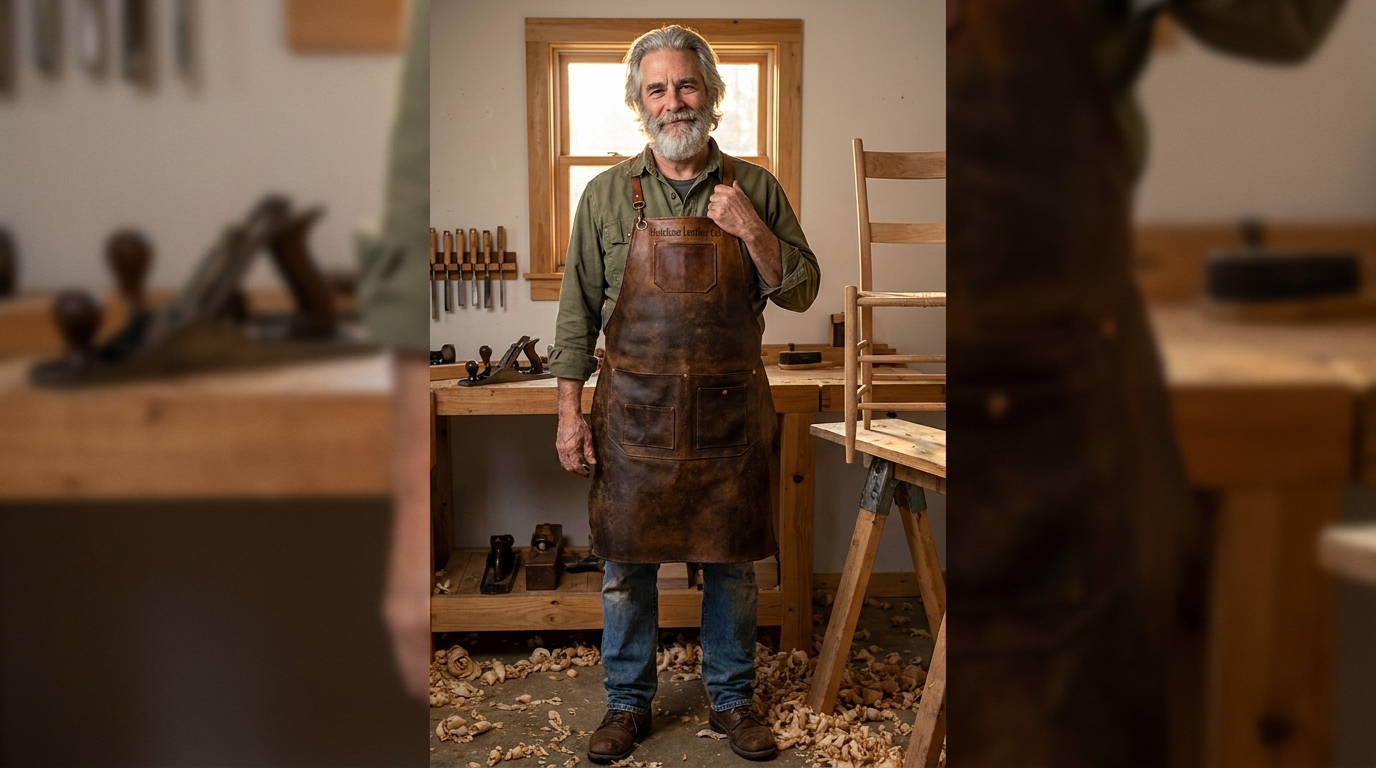
Word that the Lancaster bench was closing reached longtime owners through woodworking forums and trade circles within days. Letters and emails arrived from across the country.
"I bought my Reinholt apron in 1998 from a flooring supply in Reading, PA. It is on a hook in my shop right now, the leather yoke darker than my workbench, never repaired, never replaced. My son is 26 and he wears it on Saturdays. I will hand it to him when I am done."
"My wife gave me one for our 30th anniversary. I told her it was the most useful gift I had ever received. Eight years later the canvas has darkened where the chisels rest, and the leather yoke fits my shoulder like it grew there."
"I have built reproduction Federal furniture for 28 years and I have tried every apron the trade sells. Walter's is the only one whose shoulder yoke holds a 28-ounce framing square through an 8-hour day without forcing me to shift the load to my hips."
What unites these owners is what they did not do — none of them are the kind of woodworker who writes reviews casually. They wrote because they wanted Walter to know the apron had served them, and because they wanted other woodworkers to know what they had nearly missed when the bench closed.
What follows is the part most owners do not see until the apron arrives: the specific construction details that make the difference.
What Sets The Lancaster Bench Apron Apart From The Hardware-Store Versions
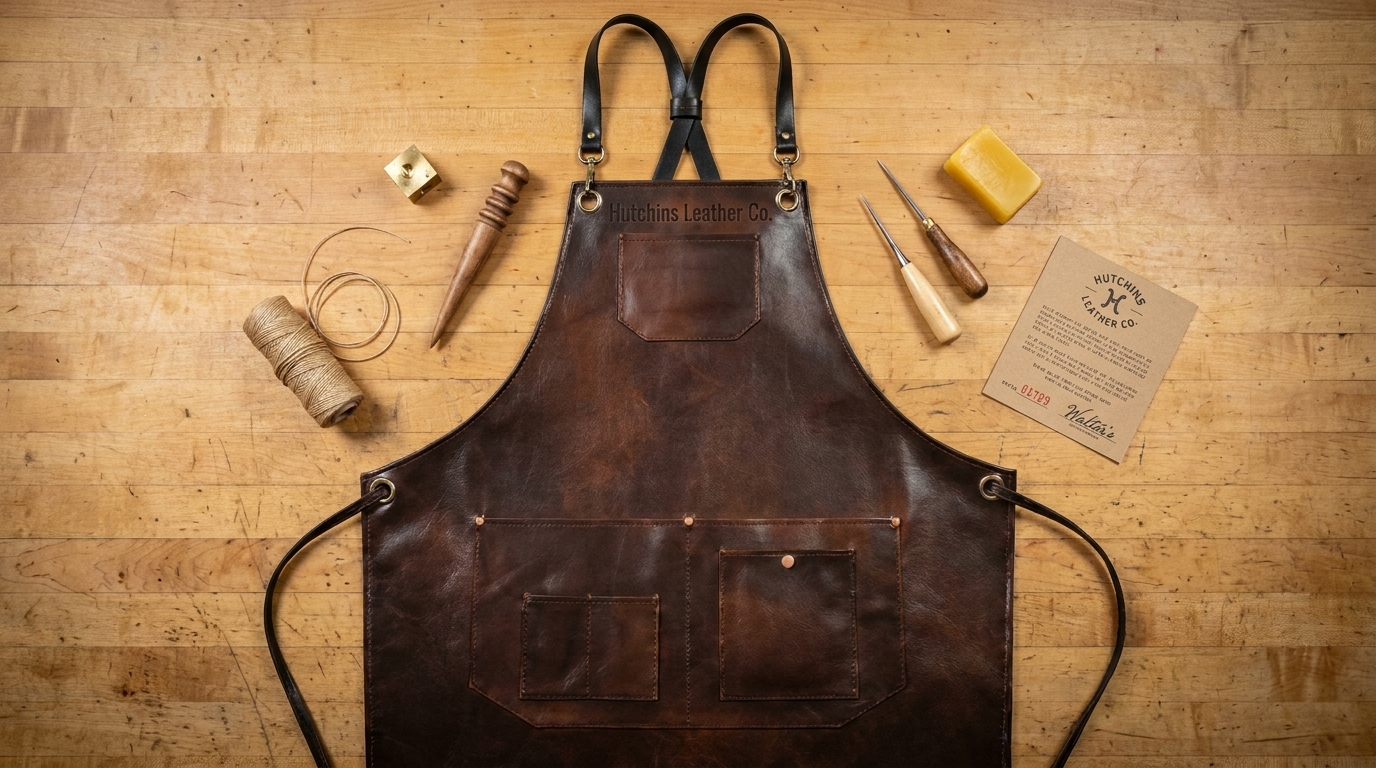
These are not marketing claims. They are the construction decisions that separate a 10-year apron from a 4-month apron, listed plainly so a woodworker can see them.
Saddle-stitched shoulder yoke. Two waxed-linen needles run by hand around every load-bearing seam — the same stitch carriage saddlers used. Where machine-locked stitches unravel from a single broken thread, the saddle stitch binds in two directions at once, like ropes around a post.
Vegetable-tanned bridle leather strapping. The yoke and front straps are cut from a single hide tanned slowly with oak bark, not chrome-finished overseas. The leather darkens with use, work-hardens under tool load, and refuses to crack at the buckle hole — improvements that come only with a decade of wear.
Balanced 14-ounce build. Lighter than woodworkers expect when they lift the package, the apron settles across the shoulders within minutes — the formed yoke balances the front-pocket tool weight directly over the trapezius rather than dragging the neck forward like a webbing strap does.
Decade-plus longevity, no maintenance. Our oldest documented apron, sewn in 1987, is still in service in a Vermont furniture shop — never patched, never restitched, never conditioned. A wipe with a dry rag once a month is the only upkeep the leather yoke has ever needed.
Hand engraving and signed bench card. Each apron carries Walter's hand-engraved signature on a brass plate, hand-numbered 1 through 200, paired with a signed certificate of authenticity.
CHECK AVAILABILITYHow To Claim One Of The Final 200 Lancaster Bench Aprons Before The Workshop Closes
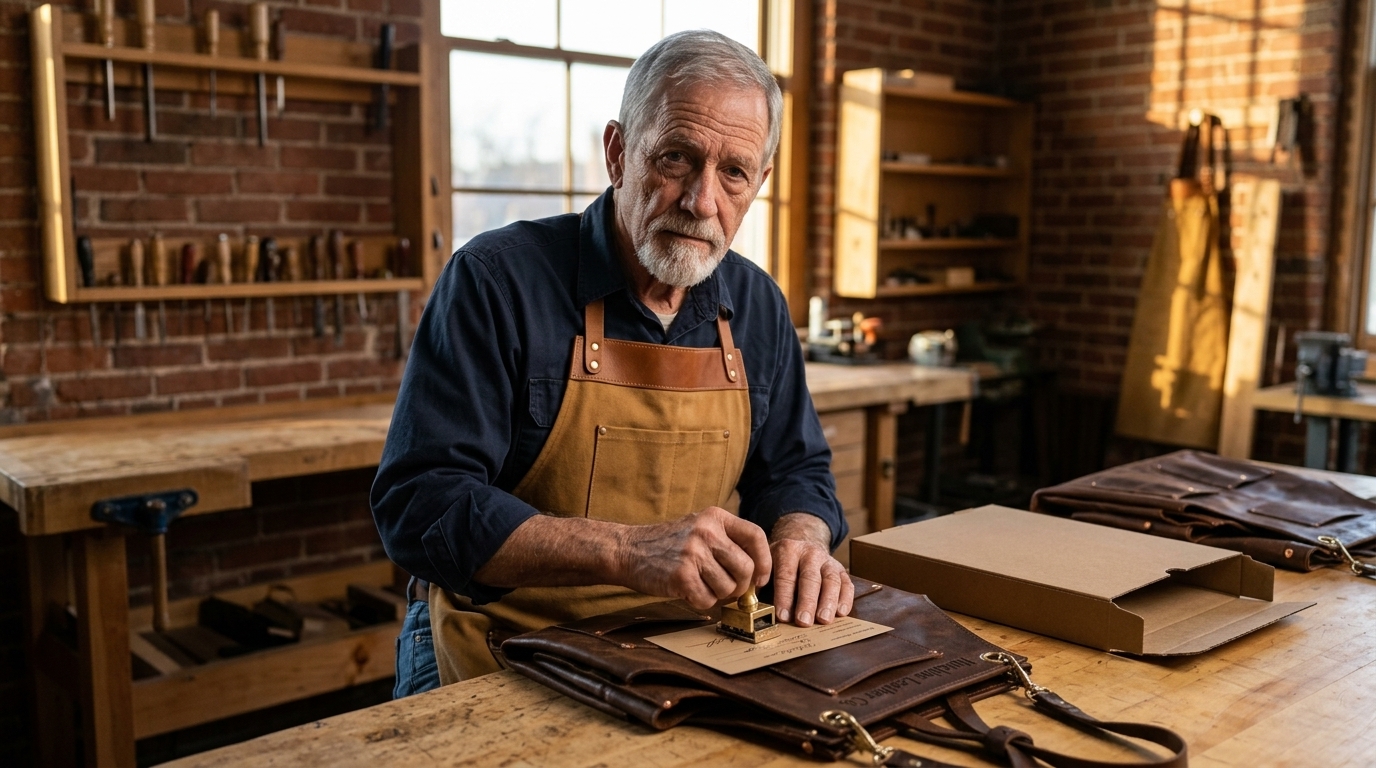
At the time of this article, fewer than 200 aprons remain. Walter intends to ship every one personally, sealed in brown paper and waxed string, with a signed bench card.
This is not a promotion. It is not a markdown. $89 instead of the $259 independent woodworking stores carried the same apron at last year — that is the workshop price.
Each apron is inspected by Walter, packed by Walter, and shipped from the bench in Lancaster. A 30-day return window applies to every order, no questions asked.
What follows are the first letters from buyers who received their aprons in the past four weeks.
"Got mine three weeks ago. The leather yoke is already starting to soften and patina across the shoulders the way Walter described in his bench-card letter. The first apron I have not wanted to take off."
"I expected a heavier apron based on the photos. It feels lighter in hand than I expected — yet sits flatter on the shoulder than the cotton-strap one I retired the day this arrived."
In 47 years at the bench, no woodworker has ever returned a Lancaster apron. The bench card files record every customer back to 1979, and the field is empty under returns.
For those who refuse the hardware-store markup, who appreciate leather over cotton webbing, and who want one apron for 10 years instead of three for 12 months — the workshop in Lancaster is open until the 200th bench card is filed.
— Walter Reinholt, Bench Master, Hutchins Leather Co. Apron, Lancaster, PA